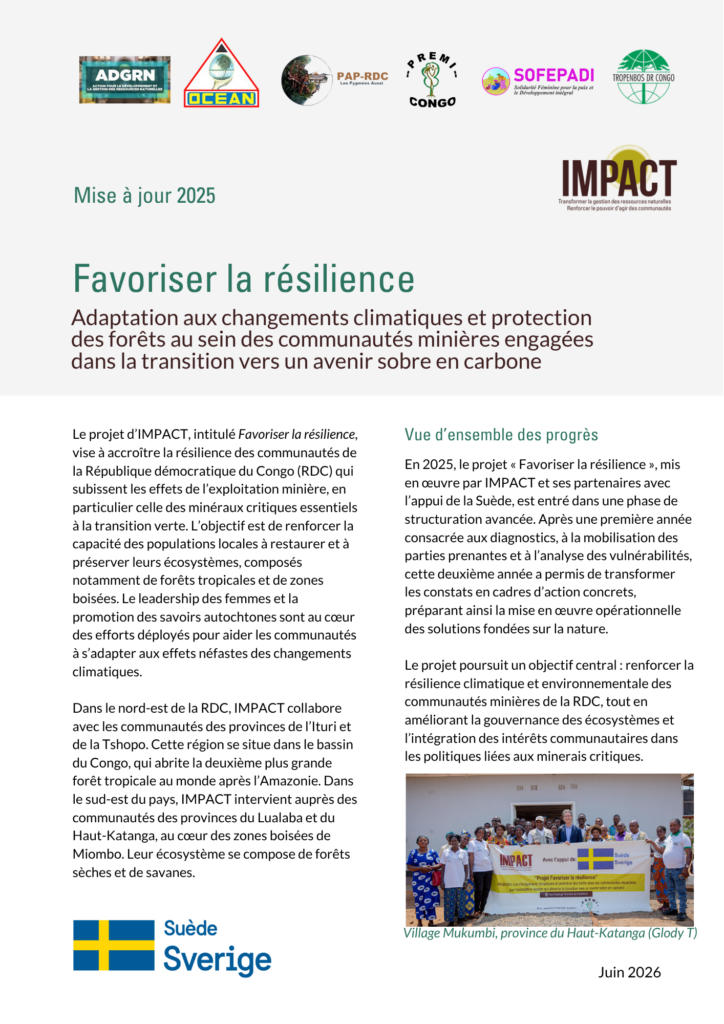
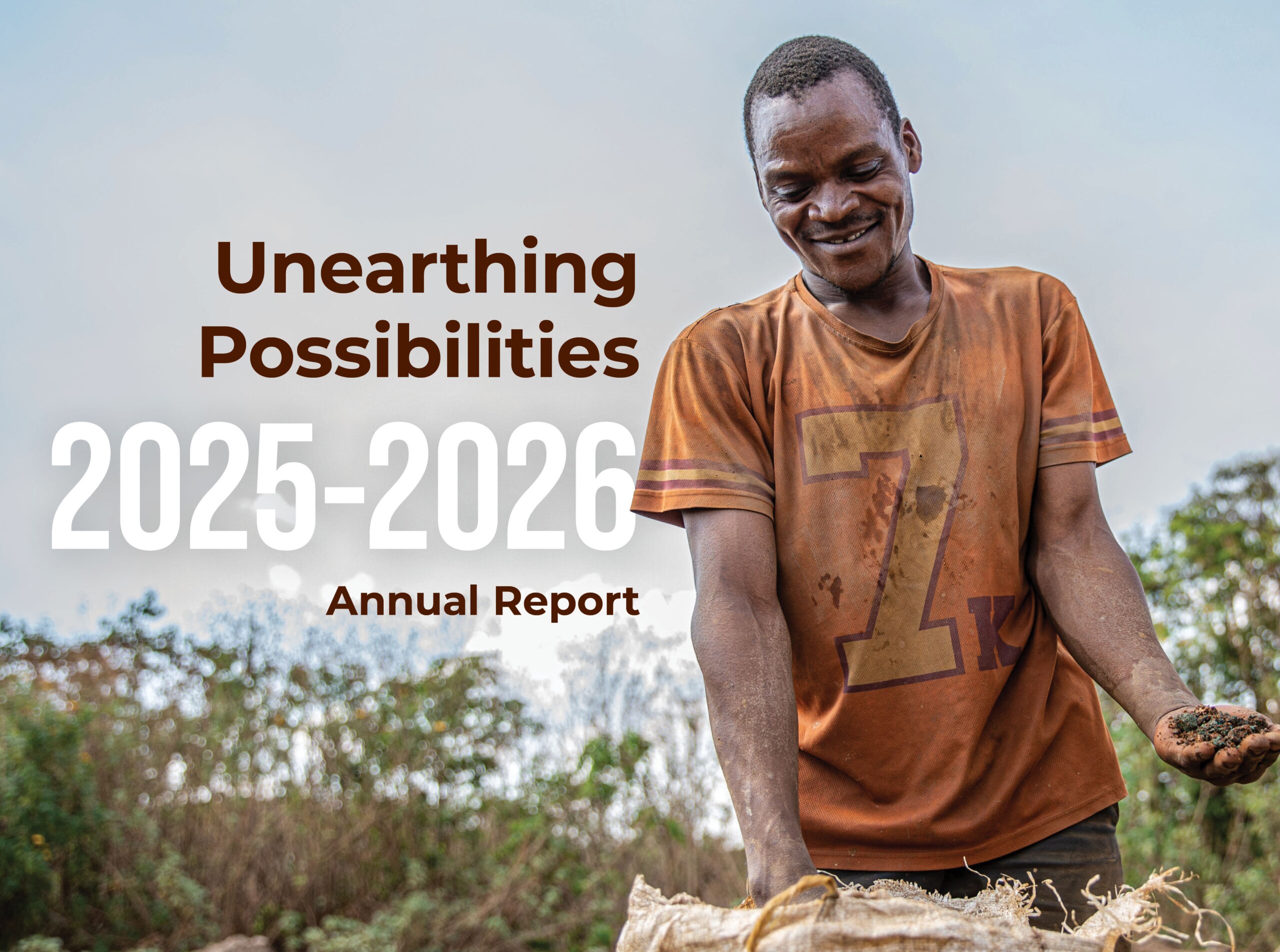
In 2025, the Powering Resilience project, implemented by IMPACT with support from Sweden, entered a phase of advanced structuring. After a first year focused on assessments, stakeholder engagement, and vulnerability analysis, the second year transformed the findings into concrete action frameworks, paving the way for the operational implementation of nature-based solutions.
The studies conducted in 2024 provided strategic direction for the interventions rolled out in 2025. Building on this knowledge, partners launched practical activities in target communities, guided by priorities identified by the communities themselves.
This shift toward implementation included:
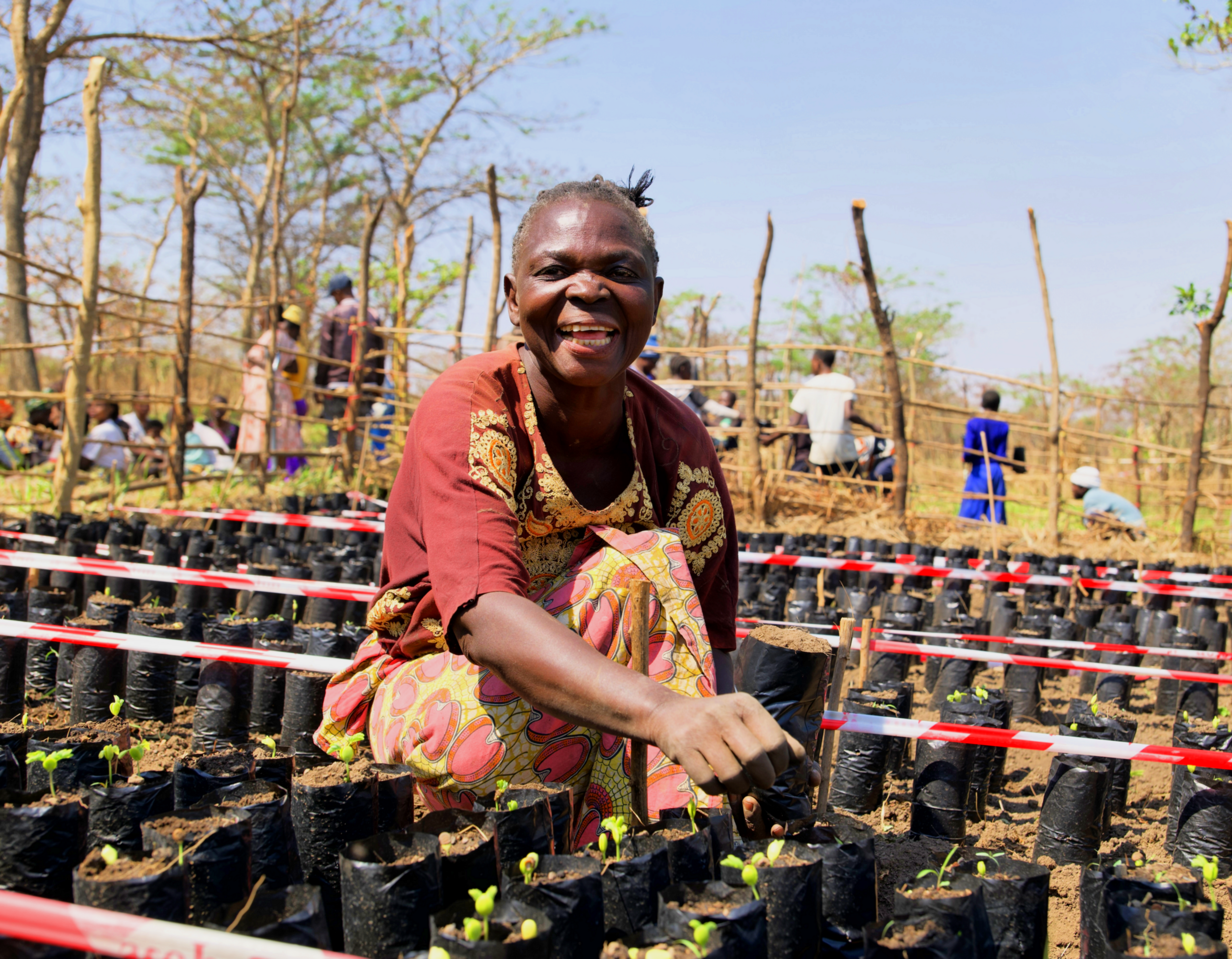
- Launching local ecosystem restoration initiatives
- Identification of nature-based solutions to support livelihoods
- Strengthening community capacities for climate change adaptation
These actions demonstrate a clear commitment to transform assessments into tangible and sustainable results.
Ecosystem Restoration and Protection with Communities
Year 2 was marked by a participatory and inclusive process to identify ecosystem-based adaptation (EbA) solutions. Communities, including women and Indigenous Peoples, collaboratively developed solutions tailored to their ecological, social, and economic realities.
Key achievements included:
- Selection and validation of EbA solutions for each site, including agroforestry, beekeeping, reforestation, assisted natural regeneration, and agroecology.
- Ecological, social, and economic feasibility analyses to prepare for effective implementation in Year 3.
- Promotion of traditional ecological knowledge documented through an in-depth study involving more than 1,500 participants.
- Initial pilot capacity-building initiatives in beekeeping, agroforestry, and community-based forest monitoring.
Ecosystem Governance in Communities
The project has invested heavily in establishing and strengthening legitimate community structures, which are essential to the sustainability of interventions. These structures now form the institutional foundation for the large-scale implementation of EbA solutions.
Achievements included:
- 11 local governance structures,including Local Development Committees, and multi-stakeholder dialogue platforms were created or revitalized.
- Five local ecosystem management plans were developed, validated, and recognized by local and provincial authorities.
- Capacity building in environmental governance, community rights, inclusion, conflict mediation, and leadership. Increased participation of women, youth, and Indigenous Peoples in decision-making bodies, reaching up to 50% representation or more in some sites
Integrating Community Interests into Plans and Strategies
- Multi-stakeholder consultations conducted at the local, provincial, and national levels.
- Integration of community priorities into ecosystem management plans and strategies.
- Establishment and operationalization of the Project Steering Committee as a key forum for dialogue and political influence.
- Training of 114 local and provincial officials on the links between gender, climate, and natural resource governance.
The achievements of 2025 demonstrate that community resilience is built not only through technical interventions, but also through local ownership, inclusion, and governance. By building on the achievements of 2024 and implementing concrete actions, the Powering Resilience project is helping to lay the foundations for sustainable change in DRC.
As pressure on natural resources intensifies amid the global energy transition, this initiative demonstrates that it is possible to reconcile resource extraction, environmental protection, and equitable development.
The Powering Resilience project aims to increase the resilience of communities in DRC that are affected by mining, particularly the extraction of critical minerals essential to the green transition. The goal is to strengthen the capacity of local populations to restore and preserve their ecosystems, which consist primarily of tropical forests and woodland areas. Women’s leadership and the promotion of indigenous knowledge are at the heart of efforts to help communities adapt to the adverse effects of climate change.
In the provinces of Haut-Katanga and Lualaba, IMPACT is implementing the project in collaboration with the following partners: ADGRN and PREMI-Congo. In the provinces of Tshopo and Ituri, IMPACT is implementing the project in collaboration with the following partners: OCEAN, PAP-RDC, SOFEPADI, and Tropenbos DRC.