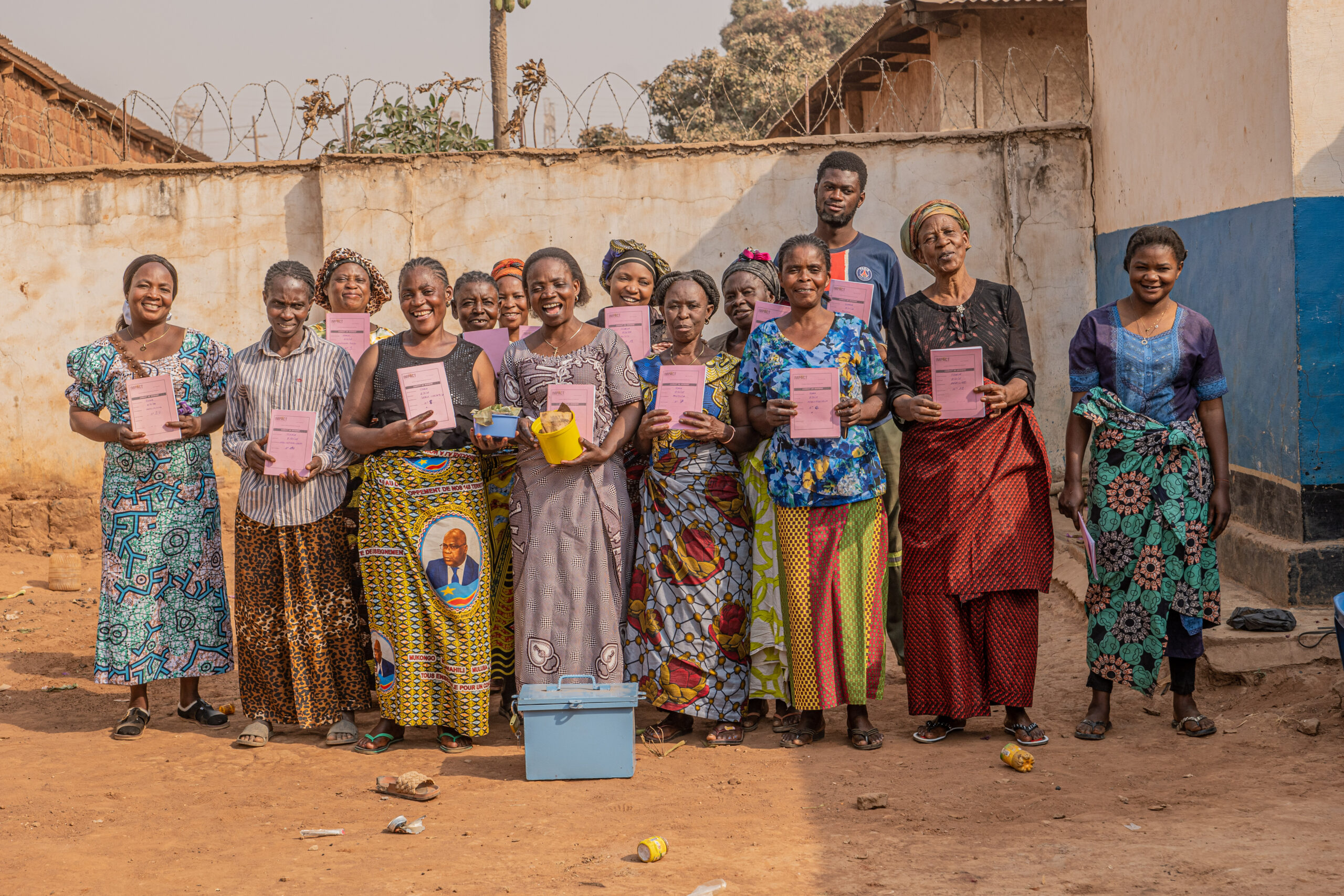
From small individual contributions totaling 48.3 million Congolese Francs, approximately $22,000, mobilized between June and August 2026: across six mining sites, communities are strengthening their capacity to save, organize, and build together.
In the mining sites of Kipushi, Kisunka, and Lwisha in Haut-Katanga Province, as well as Tshala, Biwaya, and UCK Drain in Lualaba Province in Democratic Republic of the Congo (DRC), communities were already accustomed to saving together through rotating saving schemes, tontines, or Kikurimba. However, these mechanisms did not always meet all of their needs.
Through the Her Security project, funded by the European Union, the Village Savings and Loan Associations (VSLA) model was introduced to strengthen communities’ capacity to organize, mobilize their own savings, access community-based loans, and gradually expand their economic activities.
Understanding to encourage participation
A survey of 139 people helped the project better understand community perceptions. VSLAs were widely seen as an opportunity to access loans, develop income-generating activities, build capital, and improve household living conditions.
However, concerns remained about transparency in financial management, governance, potential conflicts, loan repayment, and expectations of possible external funding. Some members also confused VSLAs with tontines or Kikurimba.
The project therefore focused on awareness-raising and direct community support. IMPACT’s community agents received training in the VSLA methodology, while local leaders, government technical services, traditional authorities, religious leaders, women’s organizations, local journalists, and civil society actors were involved in community mobilization.
Gradually, one key message became clear: a VSLA is not a from of external assistance. It belongs to its members and operates through their savings, their rules, and their shared responsibilities.
Communities then took action
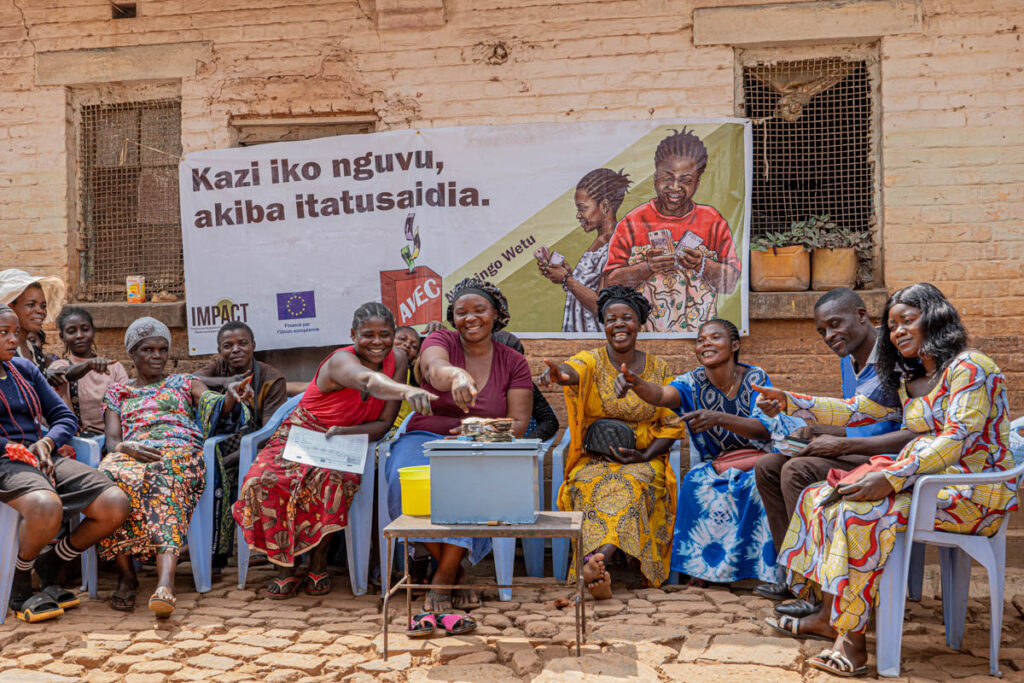
Across the six project sites, members received training on the principles of collective savings, community-based lending, governance, transparency, committee roles, and financial management.
Results quickly began to emerge: A total of 730 people were reached through awareness-raising activities, including 628 women, 86%. These efforts led to the creation of 39 VSLAs, of which 38 became operational, bringing together 747 members. Women accounted for 629 members, or 84.2%.
In Lwisha, the Umoja Gare 1 group stood out for its ability to mobilize savings. In Tshala, the strong participation of women reflects their commitment to the initiative and their determination to strengthen their economic independence.
In UCK Drain, the Umoja UCK group also distinguished itself through its commitment to collective savings. In Kisunka, the operational VSLAs provide members with an organized structure for saving and accessing community-based loans. In Biwaya, the formation of several groups, most of which are now operational, reflects the community’s growing adoption of the approach.
Beyond the establishment of saving groups, members are also beginning to change how they manage their money.
In Kipushi, Ms. Georgine Kabole, a member of the Cinquantenaire VSLA, describes this change:
Before, I would sometimes spend my money without really planning for my needs. Through the VSLA, I’ve learned to set aside a small amount regularly, even when my means are limited. Today, I think more carefully about my spending, and I understand that by saving little by little, I can prepare for the future and cope with certain unexpected events. The VSLA has also taught me to be more disciplined and to gain confidence in my ability to manage my money.
Georgine’s story illustrates the broader impact of this approach. Beyond simply accumulating savings, VSLAs encourage the adoption of new financial habits, better spending planning, and greater confidence in one’s own abilities.
48.3 million Congolese francs : More than a figure, a sign of trust

In total, VSLAs across the six sites mobilized 48,375,000 Congolese francs in savings, equivalent to approximately US$ 21,988.63, over three months.
A small, regular contribution, when multiplied by dozens of members and guided by shared rules, can grow into a significant amount of capital
For Adolphine Mondiaile, 47, a mother of six and president of the ESPOIR VSLA, collective decision-making is essential. She explains:
In our group, decisions aren’t made by just one person. Every member knows the operating rules and participates in meetings. We record contributions and transactions in our ledgers, then review loan applications according to the rules we’ve adopted together. We ensure that decisions are transparent and that every member understands their responsibilities, particularly regarding loan repayment. This structure helps us maintain trust and better manage our shared savings.
Women’s participation is one of the most striking outcomes of this initiative. For women, the savings groups also serve as spaces for learning and taking on responsibilities. They participate in resource management, collective decision-making, and the day-to-day operations of the groups.
The next challenge: making change sustainable
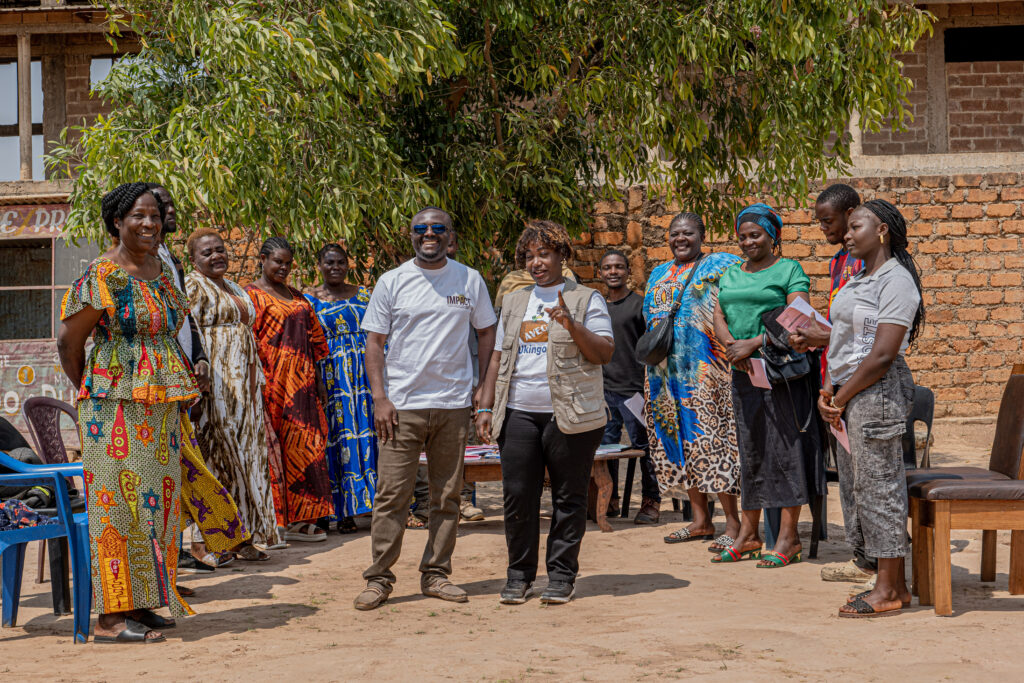
However, progress remains fragile. Some groups still need to improve their record-keeping, financial management skills, meeting regularly, and governance practices. In some communities, expectations of external funding also remain high.
The Her Security project therefore aims to consolidate these gains by identifying volunteer members of VSLAs who, after receiving training from the project’s community agents, can support and guide their peers.
The goal is to enable the groups to operate independently and sustainably over time.
Ms. Jolycoeur Njangu Mboneku, a community worker with the Her Security project, explains:
To ensure the long-term viability of the VSLAs, our goal is to enable the groups to operate independently, even after the project support ends. We are working to build members’ capacity in savings management, record-keeping, governance, and transparency. We also encourage the identification of volunteer members capable of sharing their knowledge and supporting their peers. This approach aims to strengthen skills within communities so that the VSLAs can continue their activities, maintain trust among members, and sustainably consolidate the gains achieved.
The story of the VSLAs in the Her Security project is therefore not just the story of savings groups. It is the story of communities discovering that their small contributions, when pooled and organized, can become a true collective force. Because change sometimes begins with a simple act of setting a little aside today to build a better tomorrow.