In the village of Mukoma, in Mutshatsha territory of Democratic Republic of Congo’s Lualaba Province, women are developing diversified economic strategies to strengthen the stability of their households. In a dynamic environment where artisanal mining is a significant source of income for many despite the sector’s unpredictability and fluctuating earnings, local initiatives support complementary activities, contributing to improved socio-economic security and community prospects.
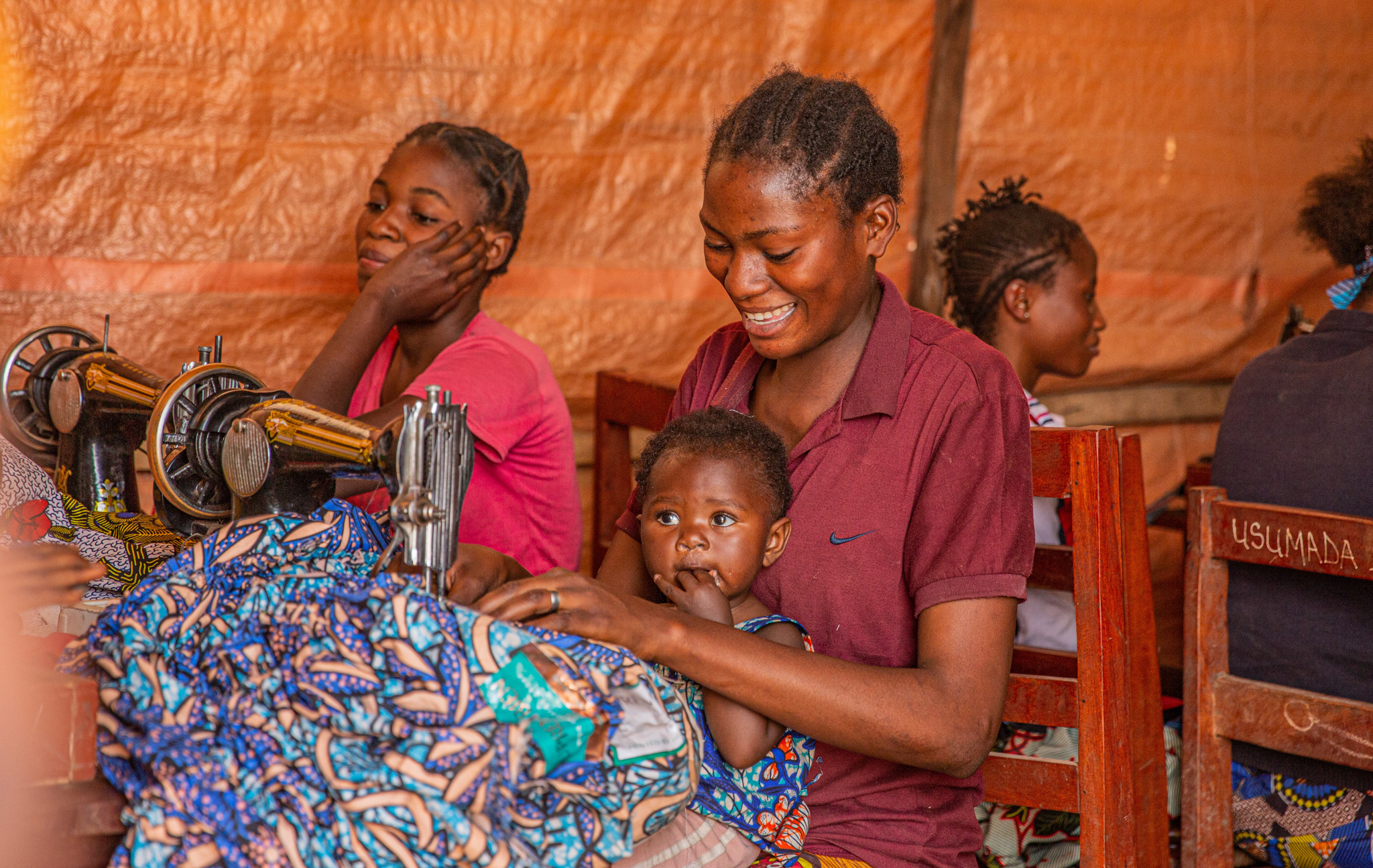
Among these women, the story of Dorcas Lusombogo Mwanya concretely illustrates this transition. A mother of a young child, Dorcas faced a difficult reality: unstable income and significant socio-economic vulnerability. Like many women in her community, she depended on limited, often precarious, economic opportunities. The Her Security project, implemented by IMPACT in collaboration with the NGO Bon Pasteur, gave Dorcas the opportunity to enroll in a vocational tailoring and sewing training. This program aimed to equip women with practical skills enabling them to develop supplementary income-generating activities adapted to their environment.
“This training showed me I could learn a trade and pursue a different kind of work,” Dorcas says.“Today, I feel capable of supporting my family without relying on mining.”
The program was designed with women like Dorcas in mind. As a participant, she received formal vocational training that combined theoretical instruction, intensive hands-on practice, and mentorship and support. This enabled her to develop her skills and build her confidence. And as her sewing skills grew, so did her opportunities to earn a living. Her personal and professional growth has enabled her to play a more active role in her household and contribute more substantially to her family’s income.
Creating Change Beyond the Individual
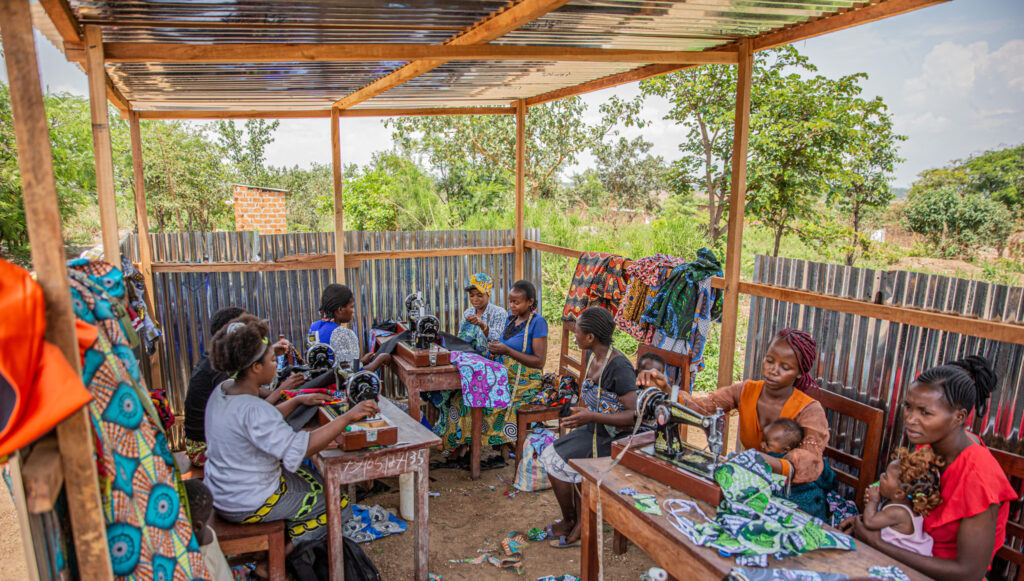
Dorcas’ journey extends far beyond her own experience. Her story highlights a broader transformation taking place among women participating in the project. In 2025, a total of 262 women and teenage girls received skills training in a range of fields. The sewing program was the most popular, with 165 teenage girls and 47 women choosing this trade. The cosmetology course attracted 20 teenage girls and 5 women, while 25 teenage girls enrolled in the culinary and pastry course. These figures demonstrate strong interest in trades that are accessible, sustainable and well adapted to local realities. They also validate the choice of trainings offered based on skills and assessments and market analysis, which identified both income-generating potential and opportunities that resonate with participants’ aspirations.
Beyond the skills acquired, Dorcas’s journey highlights a major challenge: strengthening and diversifying household income sources through complementary economic activities. By consolidating these opportunities, women can improve income stability, build resilience in the face of economic uncertainty, and increase their independence. By offering concrete, accessible alternatives, the Her Security project helps build community resilience and create safer, more sustainable futures.
Dorcas’ story is a powerful example of this transition. It reflects not only personal change but also a wider movement to empower women in mining communities. In Mukoma, as elsewhere, these initiatives demonstrate how access to skills and opportunities can create lasting change and open the door to a more stable and dignified future.