In Focus takes a closer look at the key issues shaping responsible mineral supply chains. Through expert conversations, we break down the challenges, innovations, and practical solutions coming out of our work with governments, industry, and artisanal miners to strengthen local communities.
This series features insights from IMPACT’s team and partners across five core areas: regulatory and legal reform, supply chain transparency, illicit trade and financing, gender equality, and environmental stewardship. Together, we examine how stronger policies, cross-sector collaboration, and more equitable practices can take root in the artisanal mining sector.
In this issue, we feature insights from Brahima Bakayoko, IMPACT’s Country Representative in Côte d’Ivoire. Brahima breaks down what pushes actors in the artisanal gold sector to take up responsible trade, where the biggest barriers still sit, and what policy shifts could move the formal market forward. His perspective gives a clear look at how incentives, regulation, and day-to-day realities shape the sector’s path.
From your experience, what are the main motivations and barriers for actors in the artisanal gold supply chain in Côte d’Ivoire when initially engaging with responsible sourcing initiatives?
Brahima: From what we’ve seen in Côte d’Ivoire, most actors start with a simple goal. They want to gain credibility. The sector carries a poor reputation, so adopting stronger practices can help them distance themselves from that image and be taken seriously as partners. While this potential benefit is broadly understood, most actors do not have a clear understanding of what responsible sourcing practices actually involve and how they relate with international best practices.
They also want broader market access as local buyers can’t absorb all their production. The international market offers better prospects for selling higher volumes, so it feels like a more reliable path. Support from technical and financial partners adds another incentive. This support usually goes to actors who already show some commitment to improving their practices. IMPACT’s Scaling Up project showed that once this support is on the table, interest rises.
That said, the barriers are just as clear. Responsible sourcing is still unfamiliar to many actors. Most actors don’t yet see its long-term value and are unsure how international markets function. Pilot projects like Just Gold and Scaling Up have helped, but their reach remains limited to specific zones.
The legal framework also adds a layer of friction. For instance, Côte d’Ivoire’s 2014 Mining Code references global norms such as the Equator Principles, the EITI, and the Kimberley Process Certification Scheme, but these don’t replace concrete due diligence requirements and local actors are left without clear guidance.
On the other hand, illicit trading networks make the environment tougher. They offer higher prices because they avoid official charges and rely on opaque financing, which makes it difficult for legal actors to keep up with.
Access to finance also remains scarce. Banks view the sector as risky and lack the information needed to justify lending. This shuts out many actors who are trying to operate responsibly. Finally, administrative procedures slow things down even further. They are costly and complicated. For many legal operators who want to stay on the legal path, the paperwork alone feels like a full-time job and that discourages engagement at the start.
Which incentives introduced have proven most effective in motivating artisanal gold actors toward responsible sourcing, and how do these align with the realities of Côte d’Ivoire’s informal gold market? What incentives specifically are most effective for traders?
Brahima: Under the Scaling Up project, a participatory process involving traders and miners was carried out to identify the incentives they prefer. The results show a positive trend that matches the stronger practices adopted by participants in IMPACT’s projects.
Across all participants, several priorities stood out:
- Access to finance.
- Technical support through training, coaching, and ongoing assistance similar to what IMPACT provides.
- Provision of personal protective equipment, first aid kits, and other essential equipment.
- Information sessions on the mining code and environmental regulations, along with regular dialogue with government actors.
These incentives help actors align with legal frameworks and gives them the support they need to stay involved in responsible supply chains. For traders, credit remains the biggest gap. Long-term financing is what allows them to keep their business running and contribute to stronger, more responsible sourcing practices.
How have you observed traders shifting their sourcing practices or business approaches in response to these incentives, and what indicates a shift toward sustainable change?
Brahima: The approach introduced through IMPACT’s Scaling Up Project funded by the European Partnership for Responsible Minerals (EPRM) pushed the sector towards a new direction. Transparency was rarely the norm, however ongoing discussions with traders and miners helped ease the shift. Their response showed a willingness to bring more transparency into their commercial practices.
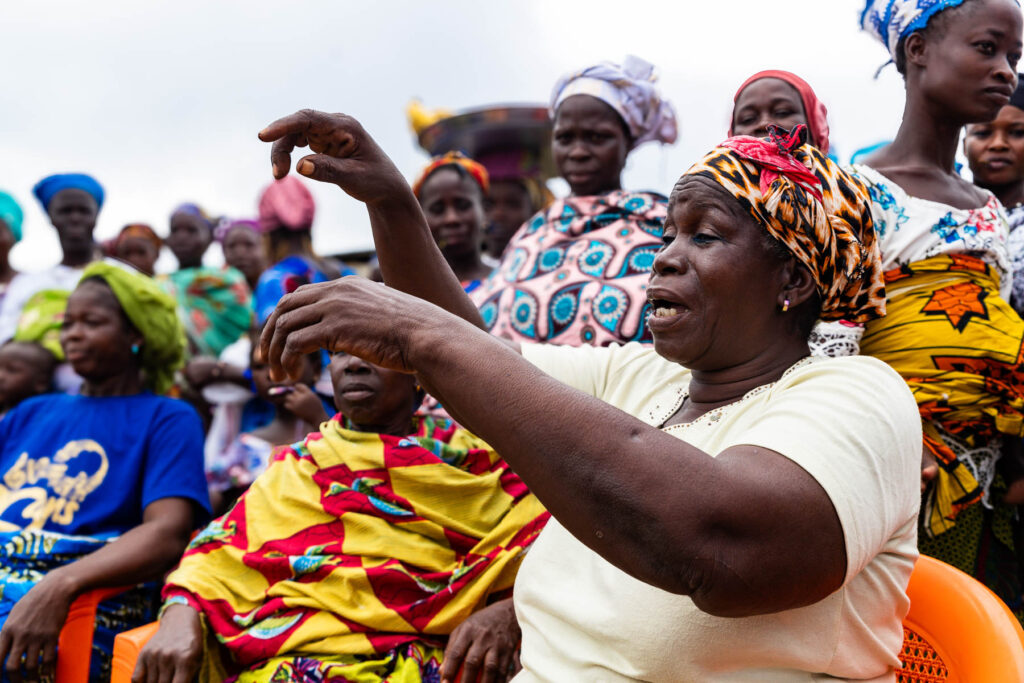
For instance, at the start of the project, information sharing between miners, traders, and authorities was uncommon. Over time, ongoing engagement under the project helped build trust and create spaces where actors were more willing to exchange information with IMPACT and each other.
This growing transparency laid the groundwork for stronger practices, such as more regular communication with relevant authorities, such as the Regional Directorate of Mines, and better record keeping within sites and cooperatives. These steps show a gradual shift towards openness in how actors operate and interact.
This collaboration supports a more modern approach to managing mining activities and contributes to development for both communities and the wider region.
What lessons have emerged in Côte d’Ivoire about balancing short-term incentives (such as premiums or financing) against long-term goals like formal recognition and market access?
Brahima: It is still early to draw broad conclusions, but a few trends are emerging from the Scaling Up project.
Short-term incentives remain appealing because local actors helped define them during a participatory process. Their expectations go further though as many want access to the international market.
The formal market has also been slow to recognize the progress made by local actors. Projects like Just Gold and Scaling Up help build a group of actors with the skills and discipline needed to attract international buyers. In addition, government involvement matters. Support from the mining administration gives actors participating in responsible sourcing the legitimacy needed to be fully recognized within the artisanal gold sector.
Which policy or regulatory shifts could significantly strengthen trader engagement with responsible sourcing in Côte d’Ivoire—and how might the government best support or complement these incentives?
Brahima: The 2014 Mining Code already includes the Equator Principles, the Extractive Industries Transparency Initiative, and the Kimberly Process. The current revision of the Mining Code presents an opportunity to include clear due diligence requirements.
The government could also bring support from institutions to train key groups. That includes staff in the Ministry of Mines, regional authorities, large mining companies through their association, small-scale mining groups, enforcement units that target illegal mining, and civil society. Putting everyone on the same page would raise the overall level of understanding and strengthen governance across the sector.
This could lead to real improvements. Authorization procedures could become simpler and less costly. Many actors say the current system is slow and expensive, so easing the process would keep more people inside the formal framework. The local mining administration would also need stronger oversight and enforcement tools to deal with illegal operators in the artisanal gold supply chain.
Government-led training on responsible sourcing would help build on what NGOs have already started, and the sector would also benefit from financing mechanisms designed for supply chain actors, since banks remain hesitant to lend.
In the end, progress on responsible sourcing will depend on several internal and external factors that will continue to shape the direction of the sector.
Given increased international demand for traceable artisanal gold, how effectively are Côte d’Ivoire’s artisanal gold actors positioning themselves, and what further support or incentives would help them meet evolving market expectations?
Brahima: Gold production in Côte d’Ivoire is expanding, which makes the country an attractive market that should benefit from strong international demand. Yet, actors in the formal artisanal gold sector still struggle to take advantage of this demand. Despite efforts made by local supply chain actors and the technical support provided by IMPACT and others, the requirements of the formal international market remain out of reach for many. This situation strengthens the dominance of informal and illegal channels, which continue to serve as the main outlet for selling gold and sustaining local activity.
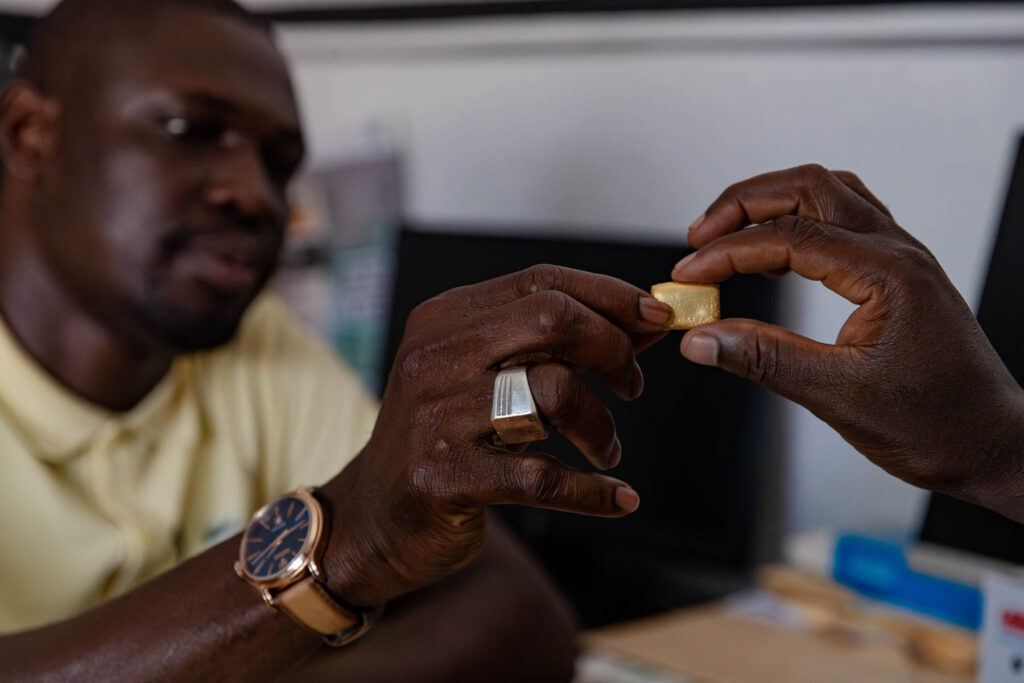
In addition, the steps needed for local actors to comply with due diligence requirements are costly. This can discourage their participation. As mentioned earlier, discussions with actors highlighted the importance of support such as training, coaching, and technical assistance on traceability, regulatory compliance, and governance.
This confirms the value of NGO-led initiatives including IMPACT and planetGOLD in pilot areas. Stronger support in these areas, combined with government involvement to replicate pilot models in other regions, would be central to gradual progress.
The government could also consider offering comparative advantages such as bonuses or simplified procedures for export and license renewal to actors committed to responsible sourcing. Setting up gold purchasing centers would be another important step toward stronger transparency in building a responsible supply chain.
Were there any findings or insights from our work to build responsible supply chains that you found surprising or did not anticipate?
Brahima: Overall, IMPACT’s work on responsible supply chains has been well received by traders and other actors, building on the earlier collaboration through the Just Gold project. The fact that many of the good practices introduced during that earlier work are still being applied shows real willingness and commitment among actors to stay engaged in long-term responsible sourcing. The credibility gained through this work has turned it into a reference point for many initiatives and missions carried out by technical and financial partners targeting the artisanal mining sector in Côte d’Ivoire.
However, it is important to acknowledge that the lack of an institutional anchor to continuously monitor and support actors involved in responsible sourcing, combined with the rapid and uncontrolled expansion of the sector and the arrival of new actors, risks undermining the progress that has been made.

Meet Brahima Bakayoko
Brahima is IMPACT’s Country Representative in Côte d’Ivoire. He has over 20 years of experience advancing democracy, human rights, good governance, and gender equality. In recent years, he has focused on natural resource governance, including supporting Côte d’Ivoire in meeting the conditions that led to the lifting of the diamond export embargo.
His expertise spans the artisanal mining sector, mining legislation in West Africa, and multi-stakeholder initiatives such as the Extractive Industries Transparency Initiative (EITI) and the OECD Due Diligence Guidance. He holds a law degree from the National University of Côte d’Ivoire.