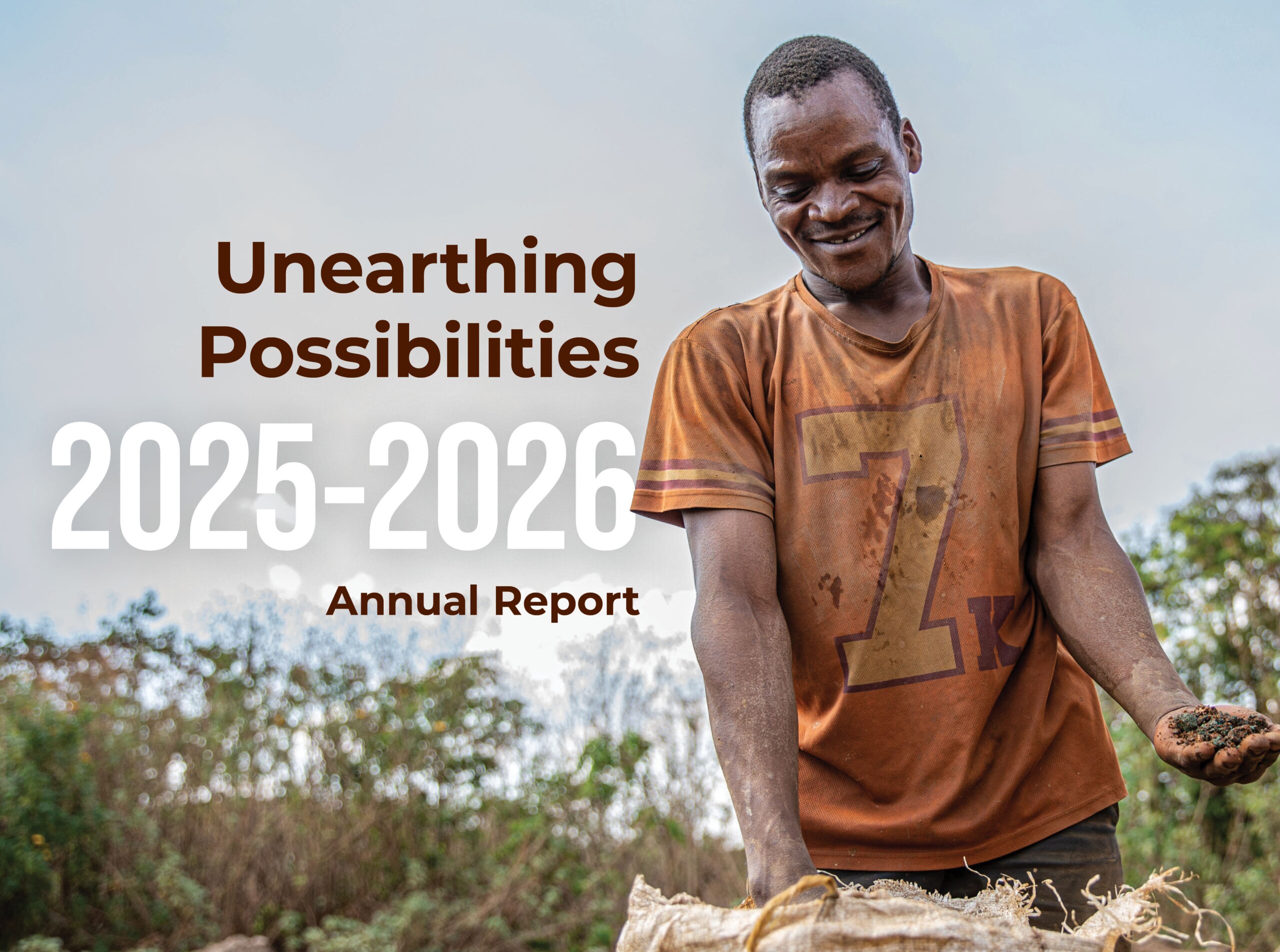
The communities around Democratic Republic of Congo’s (DRC) artisanal cobalt mines survive on just a few dollars per day.¹
Women are often the main income earners for their households,² but are struggling to make ends meet. Many families are going hungry. Children work when families get desperate, leading to a reliance on income from child labour to cover basic needs like food.
Artisanal mining is generally considered by the international community as one of the worst forms of child labour requiring it to be eliminated immediately.³ In DRC, the law outlines conditions for labour for those under 18—banning any work that exposes physical harm, or is dangerous to health or safety.4 The private sector has focused on seeking alternate sources of cobalt, while attempting to prevent child labour at mines sites by introducing fences, access points, and patrols.5 This doesn’t address root causes of child labour but simply redirects working children to another site or sector where they may be at greater risk.
As women are often the main breadwinners and tasked with childcare—it’s their income we need to augment, so that they have economic security and don’t need to rely on their children’s income. We need to invest in women and support skills building, removing barriers for women’s work and gender equity at mine sites, and ensuring they are also part of decision making affecting their family’s lives.