
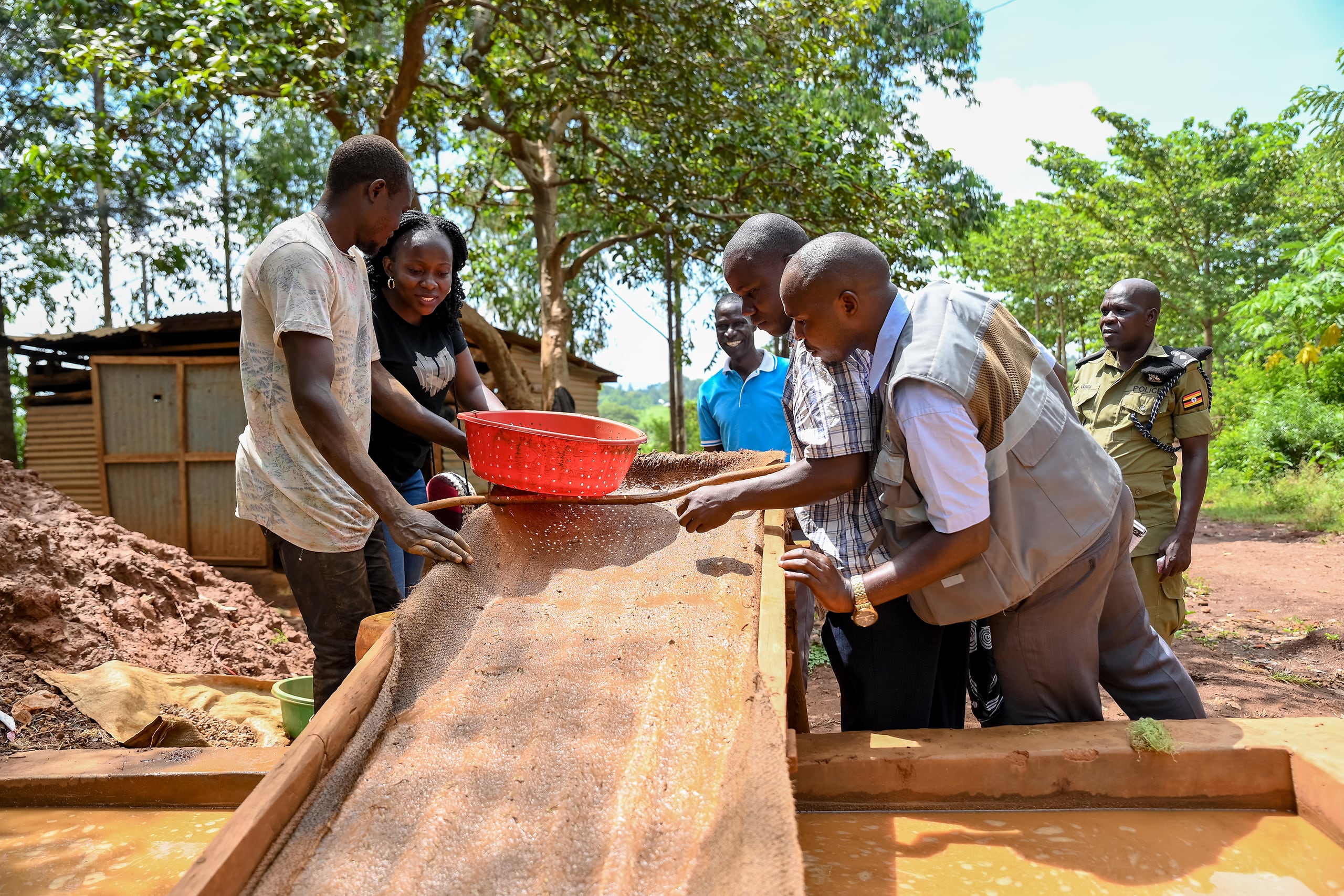
Goal
To reduce the use of mercury in Uganda’s artisanal and small-scale gold mining (ASGM) sector through a holistic, multisectoral integrated formalization approach and to increase access to finance, leading to adoption of sustainable mercury-free technologies and access to traceable gold supply chains.
The Context
Gold mining is central to Uganda’s economy. The country is rich in both alluvial and hard rock gold deposits, and ASGM accounts for more than 90 percent of national gold production. Around .31,600 women and men work directly in the ASGM sector. The wider artisanal mining sector, employs up to 600,000 people and supports an estimated 2 million people indirectly.
However, the sector also carries serious risks to human health and the environment. Mercury is widely used in gold processing, with around 73 percent of Uganda’s annual ASGM production involving the toxic substance. Each year, more than 15 tonnes of mercury are released into the environment.
Women—who make up roughly 45 percent of the ASGM workforce—are particularly at risk. They are often responsible for processing and washing, the stages where mercury exposure is highest. In some regions, women make up more than 90 percent of mine site workers.
With the growth of the artisanal mining sector over the past decade, Uganda has had to reform its legislative approach to keep up with the changing context of the mining sector. The Ugandan government is implementing its commitments as part of the Minamata Convention on Mercury, as well as the Mining and Minerals Act 2022. Uganda’s stakeholders are committed to working together for a more responsible artisanal gold mining sector.
What We Are Doing
The planetGOLD Uganda project is working to reduce mercury use by 15 tonnes and support 4,500 women and men across 11 artisanal mine sites. The planetGOLD Uganda project is supported by the Global Environment Facility (GEF) and led by the UN Environment Programme (UNEP). It is executed by IMPACT in partnership with Uganda’s National Environment Management Authority (NEMA) and the country’s Ministry of Energy and Mineral Development under the Department of Mines.
The project will:
- Optimize formalization of the ASGM sector
- Support the adoptions and implementation of legislative, regulatory, and policy capacity building frameworks for formalization
- Pilot a jurisdictional or landscape approach in two ASGM mining locations
- Promote financial inclusion and responsible supply chains
- Increase access to finance through responsible supply chain mechanisms
- Support financial inclusion initiatives for the ASGM sector in Uganda
- Enhance uptake of mercury-free technologies
- Increase awareness about mercury and the importance of its reduction
- Build capacity for improved practices
- Share knowledge and support local capacity building
- Share knowledge and information in Uganda
- Create knowledge products and tools for planetGOLD programme
*This information was originally published by planetGOLD Uganda. For more details, visit the the planetGOLD website..
Story
Spotlight on the Kayonza Mine in Uganda
Nestled in Central Uganda’s Kassanda District, the Kayonza mine site is a bustling hub of activity. Managed by the Kitumbi-Kayonza Miners Association, which includes over 40 members and is led […]
Read More for Spotlight on the Kayonza Mine in Uganda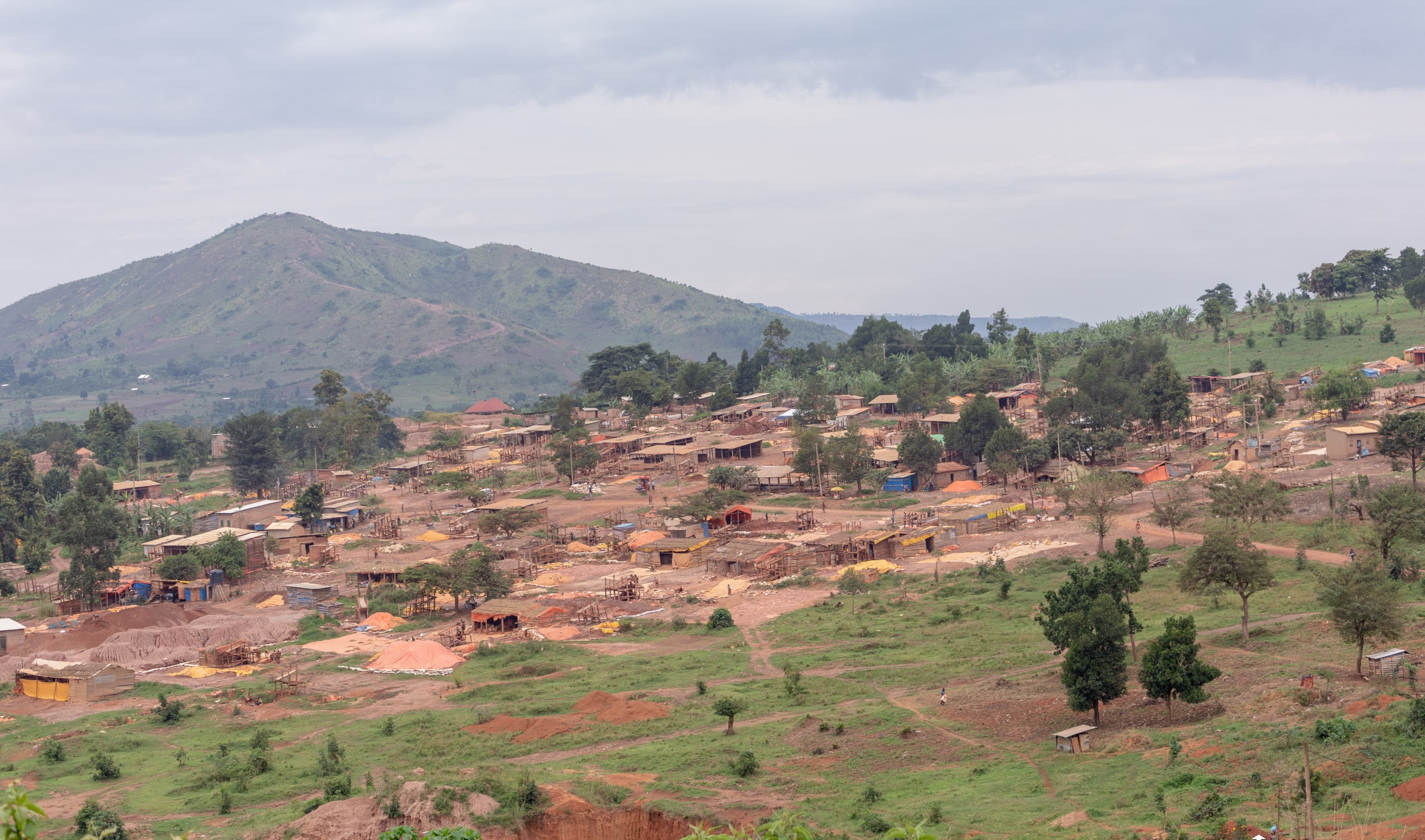
Press Releases & News
Uganda Kicks-Off Project to Reduce Mercury Use in Artisanal and Small-Scale Gold Mining
The planetGOLD Uganda project aims to reduce mercury use by 15 tonnes over five years and support 4,500 artisanal miners Kampala, November 23, 2022 – A new project launched today […]
Read More for Uganda Kicks-Off Project to Reduce Mercury Use in Artisanal and Small-Scale Gold Mining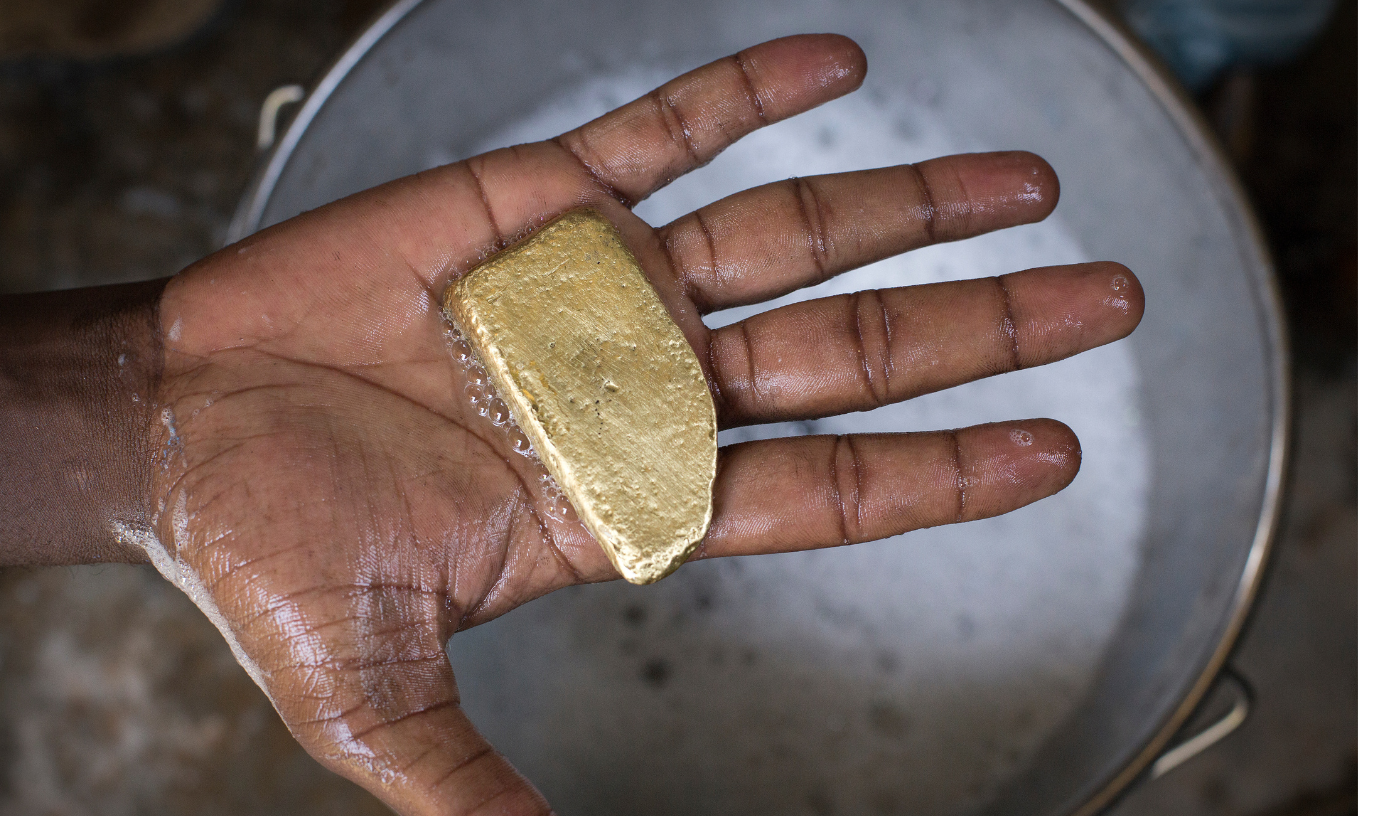


Analysis Commentary
Making Mercury History in Côte d’Ivoire, Uganda and Zimbabwe
At dawn in Uganda’s Kassanda District, Aisha, an artisanal gold miner and cooperative member, prepares for another day of work. For years, mercury was a constant in her daily routine—affordable, […]
Read More for Making Mercury History in Côte d’Ivoire, Uganda and Zimbabwe