In Focus takes a closer look at the key issues shaping responsible mineral supply chains. Through expert conversations, we break down the challenges, innovations, and practical solutions coming out of our work with governments, industry, and artisanal miners to strengthen local communities.
This series features insights from IMPACT’s team and partners across five core areas: regulatory and legal reform, supply chain transparency, illicit trade and financing, gender equality, and environmental stewardship. Together, we examine how stronger policies, cross-sector collaboration, and more equitable practices can take root in the artisanal mining sector.
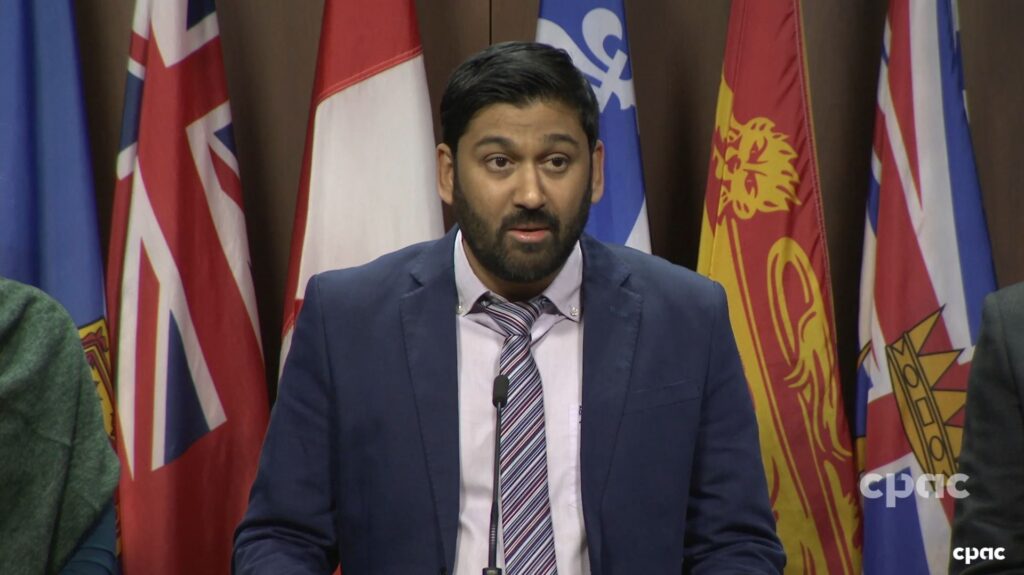
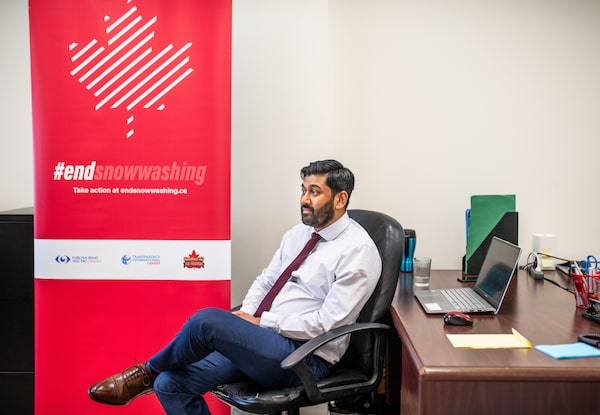
In this issue, we feature insights from Sasha Caldera, IMPACT’s Campaign Director based in Canada, on the growing push for beneficial ownership transparency. Sasha unpacks how anonymous companies can facilitate corruption, illicit trade, and resource-related crime, why stronger disclosure rules matter both in Canada and globally, and how transparency can support more responsible and accountable mineral supply chains.
What is an anonymous company, and why do they present a risk to societies, whether in Canada or abroad? Who typically benefits from them?
Sasha: An anonymous company is a business where the real people who own or control it are hidden. On paper, the company exists legally, but it is difficult to know who is actually making decisions or benefiting from its activities.
While anonymous companies are not illegal, the risk comes when they make it difficult for authorities, business partners, or even the public to identify who ultimately owns or controls the company. This lack of transparency creates opportunities for people to hide assets, move money through complex corporate structures, or avoid scrutiny.
This is a problem because when no one can clearly be identified, it becomes harder to hold anyone accountable. These companies can be used to avoid taxes, hide illegal activity, or escape responsibility for environmental damage or human rights abuse.
The people who benefit most are usually not everyday business owners. They are more often corrupt officials, criminal networks, or powerful individuals who want to move money or operate businesses without being closely examined.
That is why many countries are introducing beneficial ownership registries and stronger disclosure requirements. In Canada, for example, governments are taking steps to make it harder for anonymous ownership structures to operate unchecked. British Columbia has made its beneficial ownership property registry freely searchable. Ontario is planning to implement a corporate beneficial ownership registry in the coming years, and reporting entities are now required to report significant discrepancies in beneficial ownership information. These measures all have the same objective to make it easier to identify who ultimately owns and controls companies and assets, and making it harder to abuse corporate structures for illicit purposes.
How does corporate anonymity contribute to illicit trade in natural resources and corruption in areas where security and human rights are at risk?
Sasha: In regions rich in natural resources but with weak oversight, hidden company ownership makes it easier for illegal activity to flourish. Companies can buy or sell minerals, timber, or oil while hiding where those resources really come from and who profits from them. Anonymous companies can also be used to conceal relationships between suppliers, exporters, buyers, and politically connected actors. This makes it harder to trace illicit supply chains and identify the people responsible.
When ownership is unclear, money from natural resources can be diverted away from schools, hospitals, and public services and instead be used to fund corruption, violence, or armed groups. Communities living near these resource sites often bear the costs, including environmental damage and human rights abuses, while seeing little benefit.
Canada’s focus has largely been domestic—organized crime, tax evasion, money laundering. But how do Canadian corporate structures enable foreign actors involved in resource-related crimes to operate under the radar?
Sasha: Canada has traditionally allowed companies to be created with limited information about who truly owns them. While this may seem like a technical issue, it has real-world consequences beyond Canada’s borders.
Foreign actors can set up or use Canadian companies to appear legitimate and trustworthy. These companies can then be used to open bank accounts, move money, enter commercial relationships, or trade internationally, even if the underlying activities involve harmful or illegal resource extraction elsewhere. Canada’s strong global reputation can make these companies appear lower risk, allowing questionable activities go unnoticed.
Recognizing these risks, Canada has begun strengthening its beneficial ownership framework. Recent reforms such as requirements for reporting entities to report significant beneficial ownership discrepancies, are designed to make it more difficult for individuals to hide behind Canadian corporate structures. These are important steps, but continued efforts will be needed to ensure that Canadian companies cannot be misused to facilitate resource-related crimes abroad.
Why is it critical to advance beneficial ownership transparency as a global standard, and what role can Canadian policy play in driving that shift?
Sasha: Transparency about who owns and controls companies is essential for preventing corruption and abuse. If only some countries require this information, bad actors will simply move their operations to places with weaker rules.
Making transparency a global standard helps close those gaps and creates a more level playing field for governments, businesses, and investors. But transparency is only effective if the information is accurate, up to date and verified. Canada can help by continuing to strengthen its own beneficial ownership framework, making ownership information publicly available, searchable, and verified.
Recent measures, including stronger reporting requirements, greater oversight of corporate service providers, and commitments to expand beneficial ownership registries, show how Canada can contribute to raising the global standard while encouraging other jurisdictions to do the same.
How can greater corporate transparency help organizations like IMPACT strengthen responsible sourcing and reduce the influence of criminal networks in mineral supply chains?
Sasha: For organizations like IMPACT, which work to promote responsible mineral sourcing and reduce the risks associated with conflict, corruption, and human rights abuses, corporate transparency can be a powerful tool. When companies are transparent about who owns and controls them, it becomes much easier to assess who is actually participating in a mineral supply chain—and whether those actors present a risk.
This is particularly important because criminal networks do not necessarily appear in supply chains under their own names. They can operate through legitimate companies, intermediaries, or business partners, making it difficult to identify individuals who ultimately benefit from illicit activity. Complex ownership structures, nominee shareholders, shell companies, and opaque corporate arrangements can make it much harder to determine who controls a business or who ultimately receives the profits.
Greater transparency can help organizations ask a more fundamental question: who ultimately owns or controls this company?
That information can strengthen due diligence. If the same individuals repeatedly appear behind companies involved in corruption, smuggling, fraud, or other abuses, transparent ownership information can help organizations identify those connections earlier. It can also reveal relationships between companies that might otherwise appear unrelated.
For responsible-sourcing initiatives, this creates a more complete picture of risk. Corporate ownership information can be considered alongside other sources of information, such as sanctions lists, court records, customs data, human rights reporting, and supply-chain documentation. No single transparency measure can eliminate illicit activity, but together these sources can make it substantially harder for high-risk actors to conceal themselves.
When the real owners of companies are easier to identify, it becomes harder for criminals to move money, disguise relationships, establish new companies, and continue doing business. Greater corporate transparency adds real economic costs to criminals.
When buyers, refiners, traders, governments, and civil-society organizations have better information about the companies participating in a supply chain, responsible businesses are more readily identifiable. That can strengthen incentives for companies to comply with responsible-sourcing standards while making it harder for opaque or high-risk businesses to present themselves as legitimate suppliers.

Meet Sasha Caldera
Sasha Caldera is the Beneficial Ownership Campaign Director at IMPACT, and is based in Canada. He has spent eight years leading a national advocacy campaign toward establishing a world-class, pan-Canadian beneficial ownership registry. In this role, he has authored numerous policy briefs and position papers on beneficial ownership transparency and anti-money laundering policy reforms. Sasha brings 15+ years of experience in the non-governmental sector and is a registered federal in-house lobbyist in Canada, His ongoing advocacy has secured policy and legislative commitments at the provincial level in British Columbia (2019 and 2024), Ontario (2025), and Quebec (2020), as well as at the federal level in Canada (2021, 2022, 2023, and 2024).
He is a frequent witness before the House of Commons Standing Committee on Finance, the Standing Committee on Industry, and the Senate’s Standing Committee on Banking, Commerce, and the Economy, and his work has been featured in the Journal of Financial Compliance. Sasha’s public commentary has been published in The Globe & Mail, Toronto Star, Global News, CTV News, CityNews Toronto, TVO’s The Agenda, The National Observer, The Vancouver Sun, iPolitics, The Hill Times, The Hub, and the CBC. Sasha holds a Bachelor of Arts from Simon Fraser University and a Master of Arts from Royal Roads University.